
Overview
This project involved comparing platform-wide and algebra-focused models, ultimately selecting the latter for deeper learning impact. The tool is designed to support students in mastering linear and quadratic equations through targeted interaction.
Adaptive Scaffolding
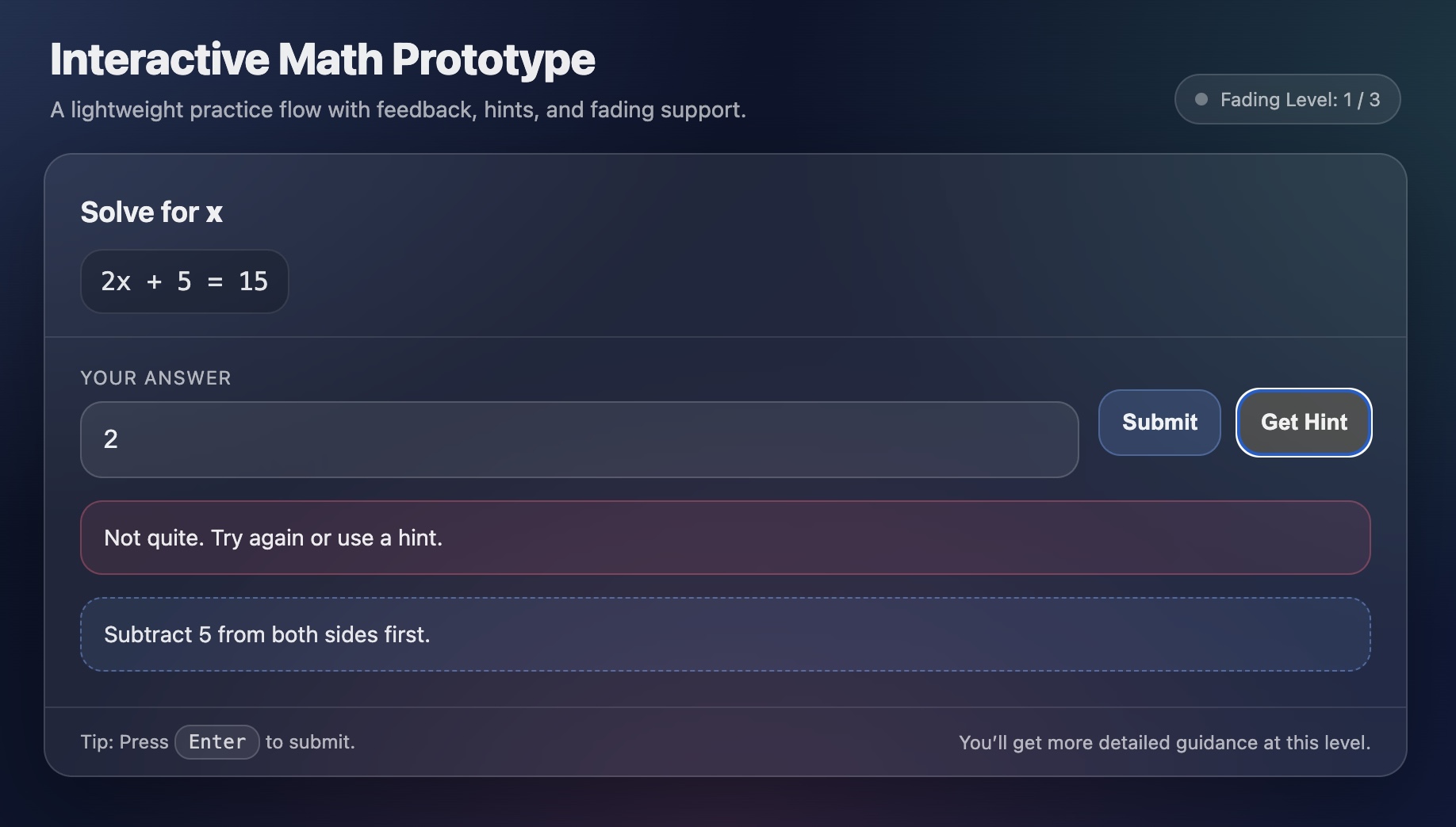
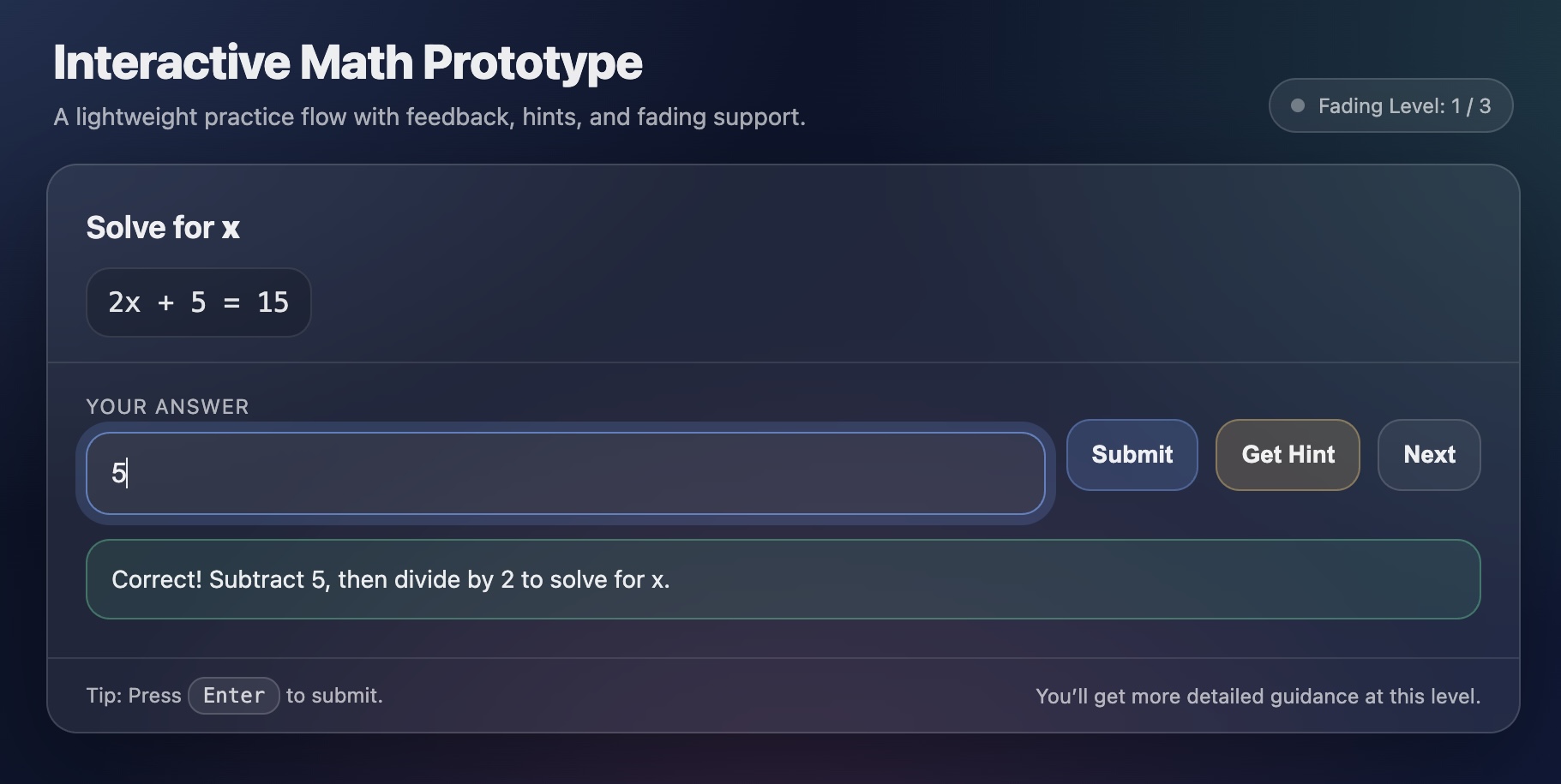
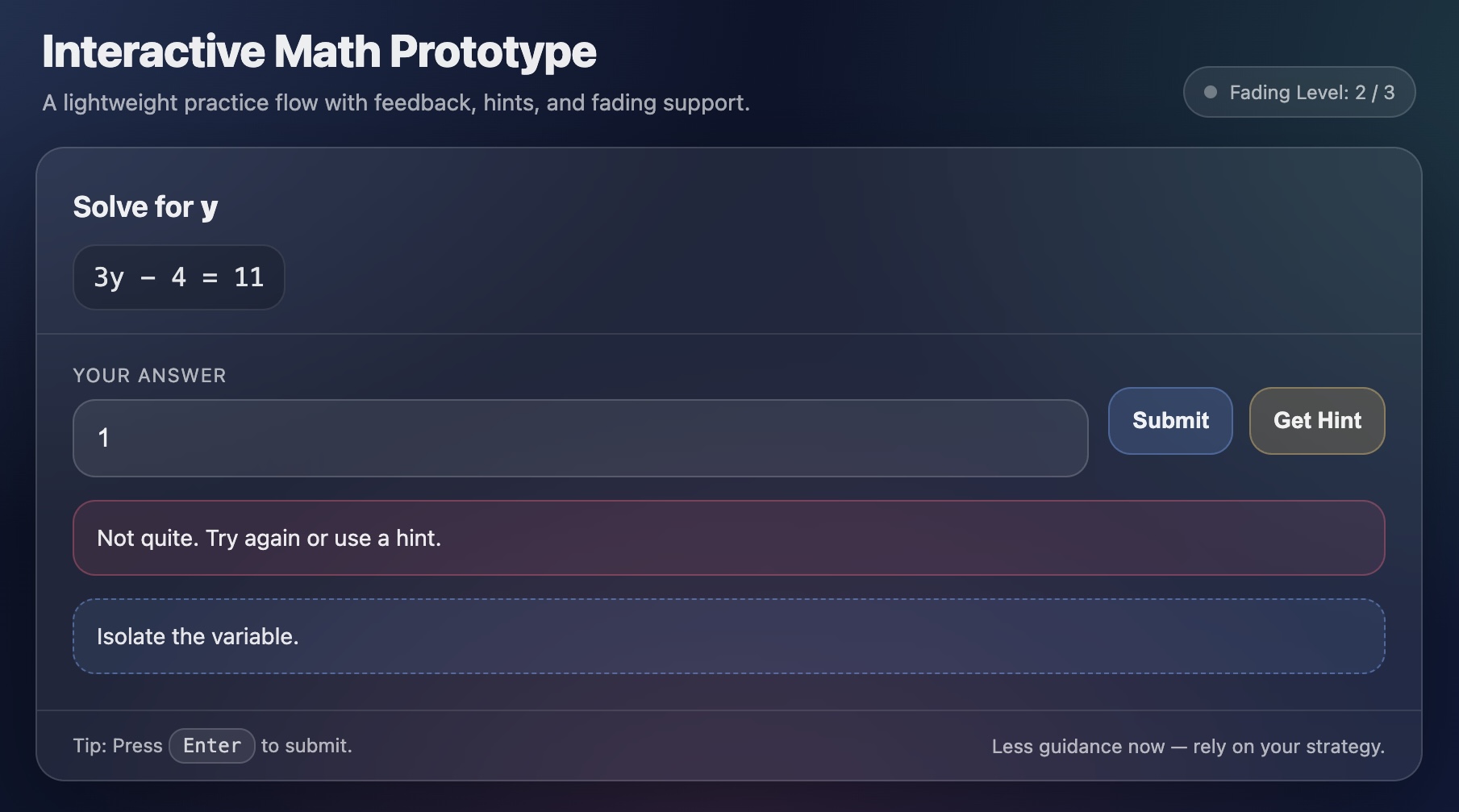
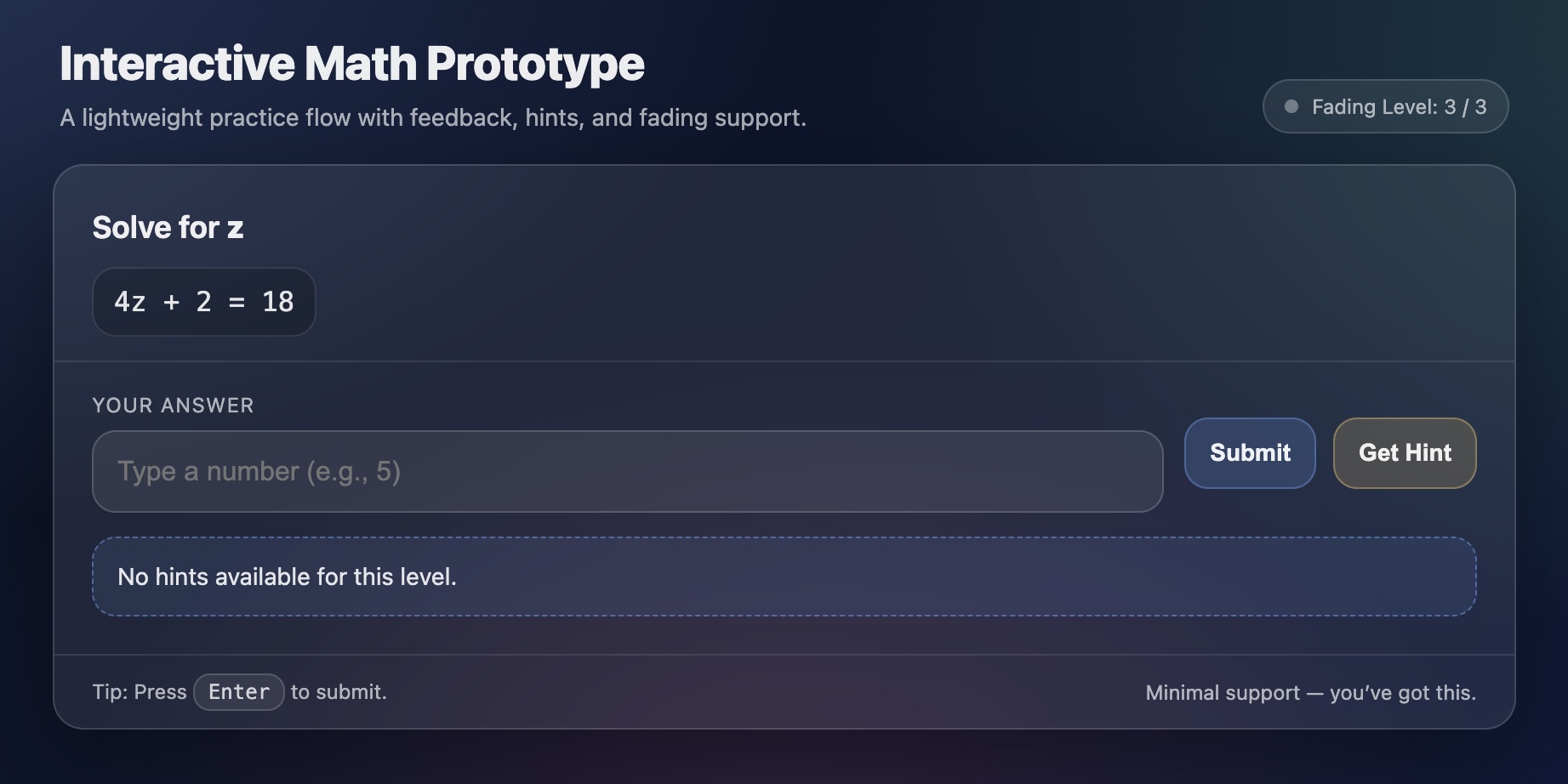
Implemented fading strategies, transitioning learners from guided steps to independent problem-solving with real-time feedback and hints.
Intelligent Guidance
Integrated a prototype software agent to detect error patterns and deliver personalized guidance, reducing repeated mistakes.
Tiered Difficulty Levels
The design ensures accessibility for beginners while providing challenge pathways for advanced learners, supporting diverse proficiency levels.
User Testing
Conducted user testing and iterated on the design based on learner performance and feedback to optimize engagement and learning outcomes.
Applied Principles
Integrating adaptive scaffolding and personalized guidance to maximize learning impact.
Scaffolding
Adaptive scaffolding transitions learners from guided steps to independent problem-solving using real-time feedback.
Software Agents
Prototype agents detect error patterns and provide personalized guidance to reduce repeated mistakes.
Iterative Design
Design refined through user testing to ensure accessibility for beginners and challenges for advanced learners.